
Skip to content

Conifer and mixed plantations

46% of Devon’s ancient woodlands are conifer plantations.

There are huge opportunities to manage them in ways that increase their wildlife value.

Goshawks and Nightjars nest in conifer woodlands. Nightjars nest in areas opened up through felling.

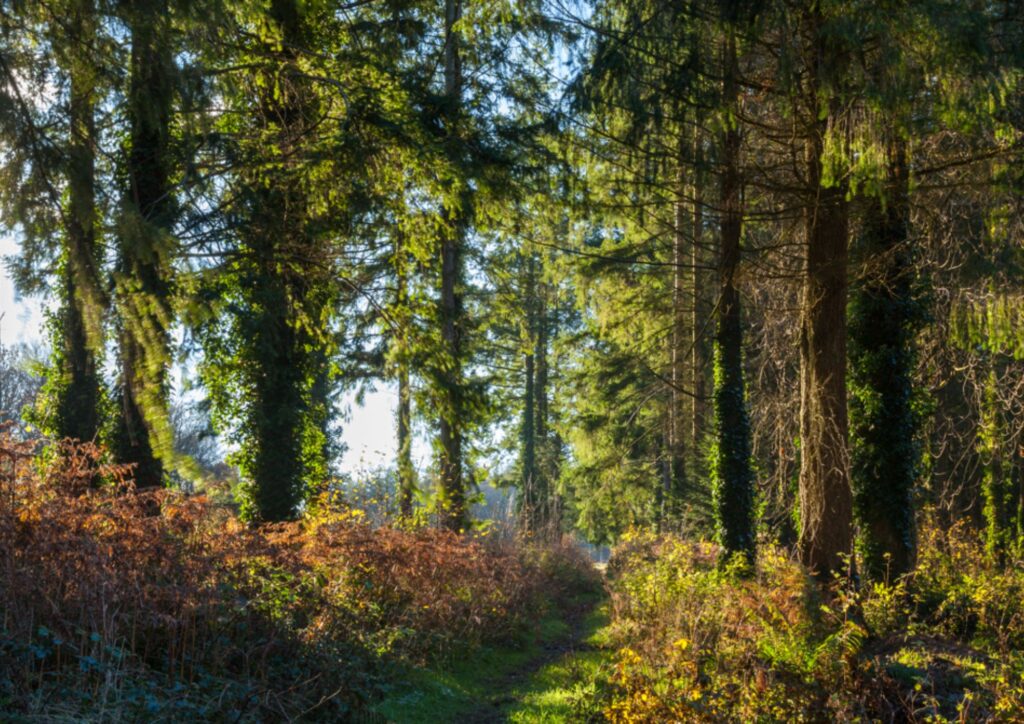
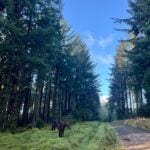
Sun peeking through a conifer forest.

Conifer, Harry Studholme

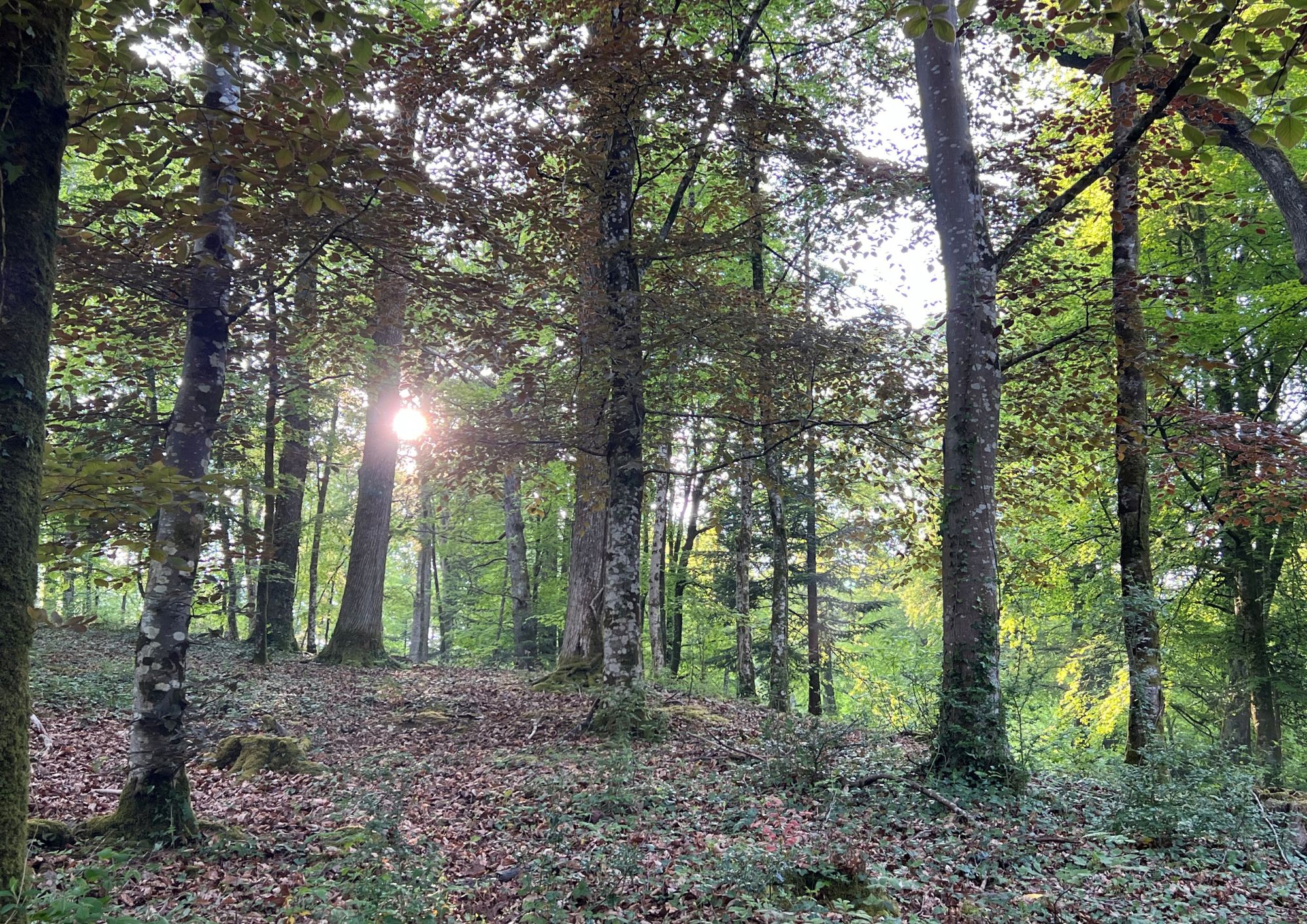
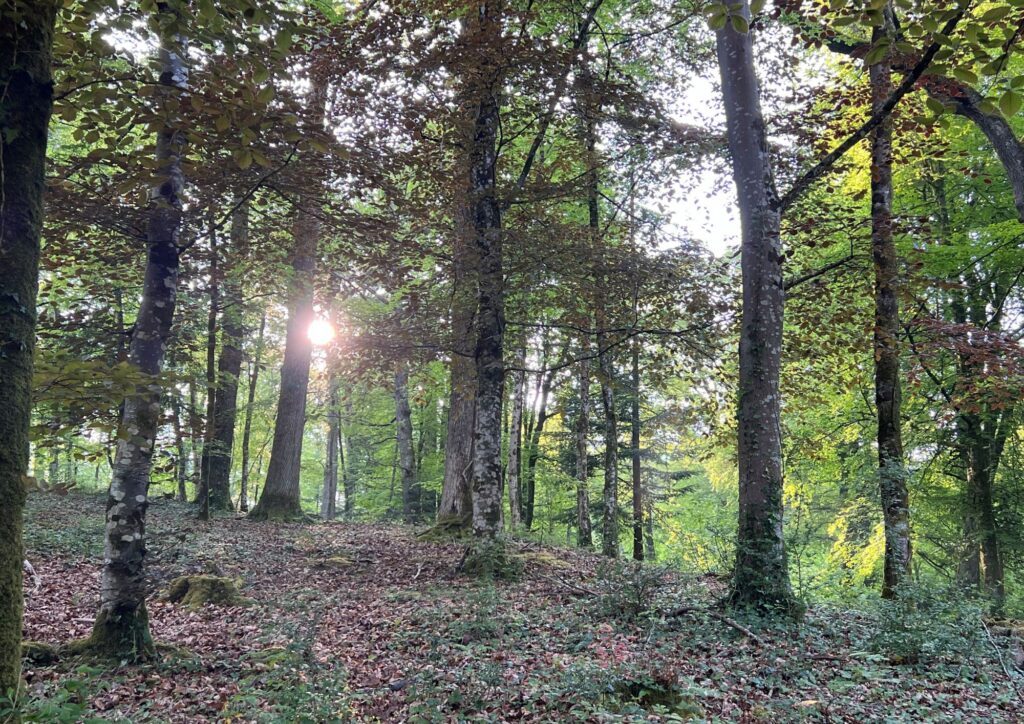
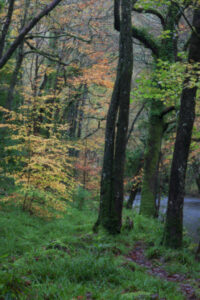
Mixed woodland, with a golden glow of the sun low in the sky.

Eggesford woods, Stephan Price

Snapshot

What wildlife-rich looks like:

Plantations are managed to provide a diversity of age and structure. This includes lots of standing and fallen deadwood, ancient trees, leaf litter, open and sunny flower-rich areas, wetlands and areas of dense scrub. Clear fell areas provide habitat for ground nesting birds such as Nightjars.
Devon Special Species include:

Conifer plantations that are managed for wildlife can support a range of Devon Special Species including:

Birds: Nightjars, Tree Pipit.

Reptiles: Adder.

Butterflies: Wood White, Pearl-bordered Fritillary.

UK significance:

UK priority habitat: No.

Statutory irreplaceable habitat: Plantations on ancient woodland sites (PAWS) and veteran trees.

Wider benefits: Timber and wood fuel, health and wellbeing, carbon capture, water quality, flood resilience.

1. About

Devon’s woods have included conifers for over two centuries. Conifers were increasingly planted from the 1800s when the ancient broadleaved coppice woodlands became economically unviable. Most of the current conifer woodland was planted after the First and Second World Wars, during which much of the productive forest was felled to meet the demand for timber.

Mixed plantations include both conifer and broadleaved species. 

Conifers such as Sitka spruce, Douglas fir, Larch and Western Hemlock were commonly planted to provide softwood timber. They also grow faster than native broadleaved species and are less likely to be damaged by deer and Grey Squirrels. Devon’s damp and mild climate is particularly suited to growing conifers and the Forestry Commission’s first conifer planting took place in the county after the First World War.

Some of Devon’s most visited woodland is conifer or mixed forest, such as the Haldon Forest Park. 

Conifer and mixed plantations make up 23% of Devon’s woodland cover, currently covering around 20,500 hectares. They were largely planted on heaths and moors where land was less suitable for agriculture. Therefore, Devon’s large conifer plantations are on Dartmoor, Exmoor and the Pebblebed Heaths, in Haldon and on the scarp slopes and plateaus of east Devon and the Blackdown Hills. Remnants of heathland vegetation can often be found in the woodlands.

In some places, ancient woodlands were felled and replaced with conifer. These sites are known as plantations on ancient woodland sites (PAWS). They have ancient woodland soils and are a priority for nature recovery through sensitive management, particularly of ancient woodland features. PAWS make up 46% of the total ancient woodland in Devon, covering about 1.1% of land.

Conifer and mixed plantations can be created and managed to maximise their value for both timber and wildlife. Plantations with trees of different species (including some broadleaved) and ages and with features such as open, sunny spaces, dead and decaying wood and scrub can support a wealth of wildlife. As well as the Devon Special Species listed above, birds which are characteristic of plantations include Firecrest, Goldcrest, Goshawk, Siskin, Crossbill and Coal Tit. More generalist birds such as tits and thrushes can also be found in plantations. Bats will forage where plantations provide insects and will roost in trees with holes and cracks.

Area

The National Forest Inventory identifies nearly 17,000 hectares of conifer woodland in Devon, plus around an additional 3,500 hectares of mixed woodland. In total this makes up 23% of Devon’s woodland cover.

Forestry England (the public forest estate) owns and manages 5,591 hectares of Devon’s conifer woodland.

The Forestry Commission estimates that there are 7,335 hectares of PAWS (plantation on ancient woodland) in Devon, which is 46% of the county’s total ancient woodland, covering about 1.1% of land. 47% of Devon’s woodland is under management, 10.73% of which is PAWS.  

Designations

A number of woodland SSSIs are classed as mixed or conifer, including woodlands at Ausewell, Fingle, Bovey Valley, Haldon and Plym Valley on Dartmoor and Heddon and Great Wood on Exmoor. There is no condition assessment data available relating to the coniferous element of these woodlands.

Key pressures and opportunities

There are significant opportunities to grow high-quality timber in Devon. The income generated from conifers and mixed woodlands can help fund work on nature recovery.   

More recent plantations of conifer and mixed woodland can be managed to maximise both timber value and natural diversity – a mark of good forestry. Sympathetic woodland management (such as continuous cover forestry) can create a mixed age, species and height structure that provides significant nature recovery as well as timber and carbon benefits.

In some cases there are great opportunities to restore PAWS to broadleaved woodlands. However, this is not always the best option. Sympathetic management of PAWS (retaining conifer in the mix) and ancient woodland features can also be very beneficial to wildlife.

However, there is currently no incentive for landowners (other than those focused entirely on native habitat restoration) to undertake reversion to native woodland. While there may be some short-term grant incentives through CS Higher Tier schemes, in the long term land managers are faced with high planting and establishment costs, the need to undertake pest control (see below) and the high likelihood of irreparable damage to whatever they plant.

Site-specific and landscape-scale control of deer and squirrels is essential as they can cause damage that significantly reduces which tree species can be planted and how likely they are to establish successfully. 

Invasive species, such as laurel and rhododendron, are usually controlled in plantations. However, it’s vital that this control continues.

Rigorous biosecurity is also essential as pests and diseases continue to increase in number and frequency. For example, Phytophora ramorum and Phytophora pluvialis are threatening the productivity of conifer woodlands in Devon.    

See the Invasive non-native species page for more information.

Climate change is having a number of affects. Increased adverse weather events, such as droughts and storms, make it harder to manage woodlands and can prevent new woodlands from establishing. Climate change can also affect which species will thrive and which won’t. Therefore, people creating new woodlands are uncertain which species to choose.

The most effective way to use trees to manage carbon is to get them to grow quickly and then harvest the timber and use it to replace carbon-intensive materials (such as concrete) in construction. Growing under the Woodland Carbon Code also provides opportunities to generate income from new mixed woodlands.

Plantation woodlands and new mixed woodlands are relatively robust habitats suitable for a wide range of recreational uses. The very best, such as Haldon Forest Park, provide a mix of nature, landscape, recreation and timber.

The Forestry Commission provides funding to support woodland management planning and grants to create new mixed woodlands.

Plantations may be less likely to preserve archaeological sites due to modern ground-preparation methods. However, they can still be associated with substantial sites such as hillforts and Norman motte and bailey castles. Former industrial landscapes, such as the open cast iron mines of the Blackdown Hills, the tin workings of the Bovey Basin and the mines of the Tamar Valley (a World Heritage Site) were planted with commercial forestry after their abandonment, preserving much of the archaeology.

2. What we need to do and where

Priority

Better (wildlife-rich), resilient conifer and mixed plantations that are connected to a network of habitats across Devon, benefiting ancient woodlands, Devon Special Species and achieving wider benefits such as carbon capture, water resilience and health and wellbeing.

See Find out more below for relevant national and local targets.

Actions for conifer and mixed plantations

See Find out more below for links to detailed guidance and sources of funding and advice.

Sustainably manage existing conifer and mixed plantations for wildlife

  • Get ecological advice to understand the condition of woodlands and the actions needed to maintain or enhance their condition. Get silvicultural advice to develop and implement a woodland management plan in line with national best practice and guidance. See Find out more below.

Management actions to include: 

  • Maximise timber production alongside other environmental benefits.
  • Manage and expand remnant features, priority habitats (such as remnant heathland) and species.
  • Adopt low-impact silvicultural systems including continuous cover forestry.
  • Ensure a range of stand structures that includes diverse ages, species and vertical forms and permanent and temporary open spaces that allow for open, scrub and edge habitats.
  • No, or low levels, of invasive non-native species.
  • Keep deadwood and leaf litter in place.
  • Manage pests and diseases.

Undertake informed, gradual and targeted restoration of plantations on ancient woodland sites (PAWS)

  • Use site assessments to inform restoration and management practices that increase naturalness.
  • Keep and enhance historic and natural features such as hedge banks, mature native trees and ancient and veteran trees.
  • Where appropriate, restore native tree, shrub and herb species and gradually transition plantations to resilient and predominantly native broadleaved woodland.
  • Manage mixed coniferous PAWS sites sympathetically to increase their wildlife value, with a particular focus on ancient woodland features.

Design all new conifer and mixed plantations to maximise their wildlife value.

Design new conifer and mixed plantations to benefit wildlife in line with the United Kingdom Forestry Standard (UKFS) and Forestry Commission Woodland Creation Offer to maximise opportunities for public funding.

Where appropriate, clear areas of conifer and mixed plantation (non-PAWS) to restore other wildlife habitats such as heathlands.

Many conifer and mixed woodlands have been planted on wildlife-rich habitats such as heathlands. In some cases they can be managed as a woodland and heath mosaic. However, sometimes it will be preferable to restore large areas of heathland from conifer, especially where this will link areas of fragmented heathland.  For further information about when it is appropriate to convert forest to open habitats please see When to convert woods and forests to open habitat: operations note 68 – GOV.UK.

Develop and implement collaborative, landscape-scale approaches to squirrel control and deer management, including the development of supply chains and new markets for venison.

  • There’s a need for landscape-scale control measures for deer and Grey Squirrels. To succeed, programmes need an individual or organisation that can provide the impetus and co-ordinate sustained action over an extended area.

Survey, research, awareness

Promote sites where conifer and mixed woodlands have been successfully managed for wildlife, such as Haldon Forest Park, Fingle and Ausewell woods.

Where to focus action

Wildlife will benefit from these actions being implemented across Devon. However, actions are prioritised to the following High Opportunity Areas. See Mapping for the LNRS Viewer and information on how areas have been mapped.

  • Plantations on ancient woodland sites and other conifer plantations (existing)
  • Woody habitat expansion areas

Actions should also be guided by the following Opportunity Areas:

  • Mammals: Bechstein’s Bat
  • Birds: Pied Flycatcher and Wood Warbler
  • Butterflies: Wood White, Pearl-bordered Fritillary, High Brown Fritillary, Heath Fritillary
  • Water quality and flood risk opportunity areas

Advice should be obtained before any woodland creation takes place in the following High Opportunity Areas and Species Opportunity Areas to ensure that it complements and supports existing wildlife:

  • All areas in the Wildlife-rich grassland mosaic group
  • All areas in the Heath, mire and rush pasture mosaics group
  • All areas in the Upland bog, heath and mire mosaics group
  • Coastal habitats and Coastal Wildbelt
  • Dartmoor breeding wader recovery zones
  • Whinchat zones
  • Wintering estuarine birds
  • Teign Gorge rock spiders
  • Greater Horseshoe and Grey Long-eared Bat sustenance zones
  • Marsh Fritillary and the Narrow-bordered Bee Hawk-moth zone
  • South Devon arable plant zone

Important: Always check that actions won’t conflict with statutory requirements (for example, statutory wildlife sites such as SSSIs or scheduled monuments) or harm existing wildlife habitats, the historic environment or landscapes. See the Environmental sensitivities page for more information.

3. Inspiration

Case studies

Fingle Woods

A number of organisations are managing mixed and conifer woodland for nature recovery. The Woodland Trust and National Trust woodlands at Fingle Woods show how detailed techniques have been used to restore planted ancient woodlands.  

Deciduous woodland in autumn with a river in the background.

Managing mixed plantations

Excellent examples of how to manage mixed plantations and planted ancient woodlands include Perridge Estate and Clinton Devon Woodlands. Both demonstrate exemplary management based on a continuous cover approach.

Forestry England sites

Forestry England sites include Haldon, Plym Valley and East Devon.

If you’re doing something to help nature thrive, please share it on the Devon Nature Recovery Delivery Map to inspire others to take action.

Where to visit

Always follow the Countryside Code and keep to footpaths and sites that are managed for public access. 

Woodland Trust and National Trust woodlands at Ausewell and Fingle. Forestry England sites include Haldon, Plym Valley and the woods in east Devon near Honiton.

For information on visiting these and other sites that are open to the public please see the Explore Devon website.

4. Find out more

The Devon Tree and Woodland Strategy (2024).

The Woodland Wildlife Toolkit has advice on managing woodlands for wildlife, in particular rare and declining species that are dependent on woodland habitats.   

Undertake management in accordance with United Kingdom Forestry Standard (UKFS).

Achieve accreditation for sustainable timber supply from UK Woodland Assurance Scheme or Grown in Britain.

The benefits of continuous cover forestry.

 Forestry Commission Woodland Management Guidance to maximise opportunities for public funding. 

Woodland Condition Assessment.

Forest Research advice on management of native and ancient woodland is at FR Guidance

Forestry Commission guidance on woodland creation is at FC woodland creation guidance.

Confor guidance on both management and creation is at Confor guidance.

Woodland Trust Guidance on woodland restoration is at Woodland Trust Guidance.

Woodland Trust Guidance on woodland creation is at Woodland Trust Creation Guide.

Detailed advice and support on management can be found on Continuous Cover Forestry. Also see an infographic: The benefits of continuous cover forestry.

Nature rich

Long Term: Woodlands in active management for biodiversity, climate and sustainable forestry

Short Term: 70% of woodlands in active management by 2030

More, larger and better connected

Long Term: Expanded as part of 16.5% woodland cover by 2050

Short term: Part of 3,000 hectares of new woodland by 2030

At least 15% of plantations to be managed for wildlife (as per UK Forest Standard).

  • Fingle Woods- Robbie Forrester, National Trust Images

Draft